The MCB in your switchboard has one job: cut the power before a fault becomes a fire.
Book a verified electrician on EliteCrew (elitecrew.online) for same-day fault diagnosis.

A tripping MCB is annoying — and it's also your home's safety system doing its job. Learn to read what your switchboard is telling you, and when to call an electrician.
EliteCrew Team
Home Services Experts · 22 April 2026
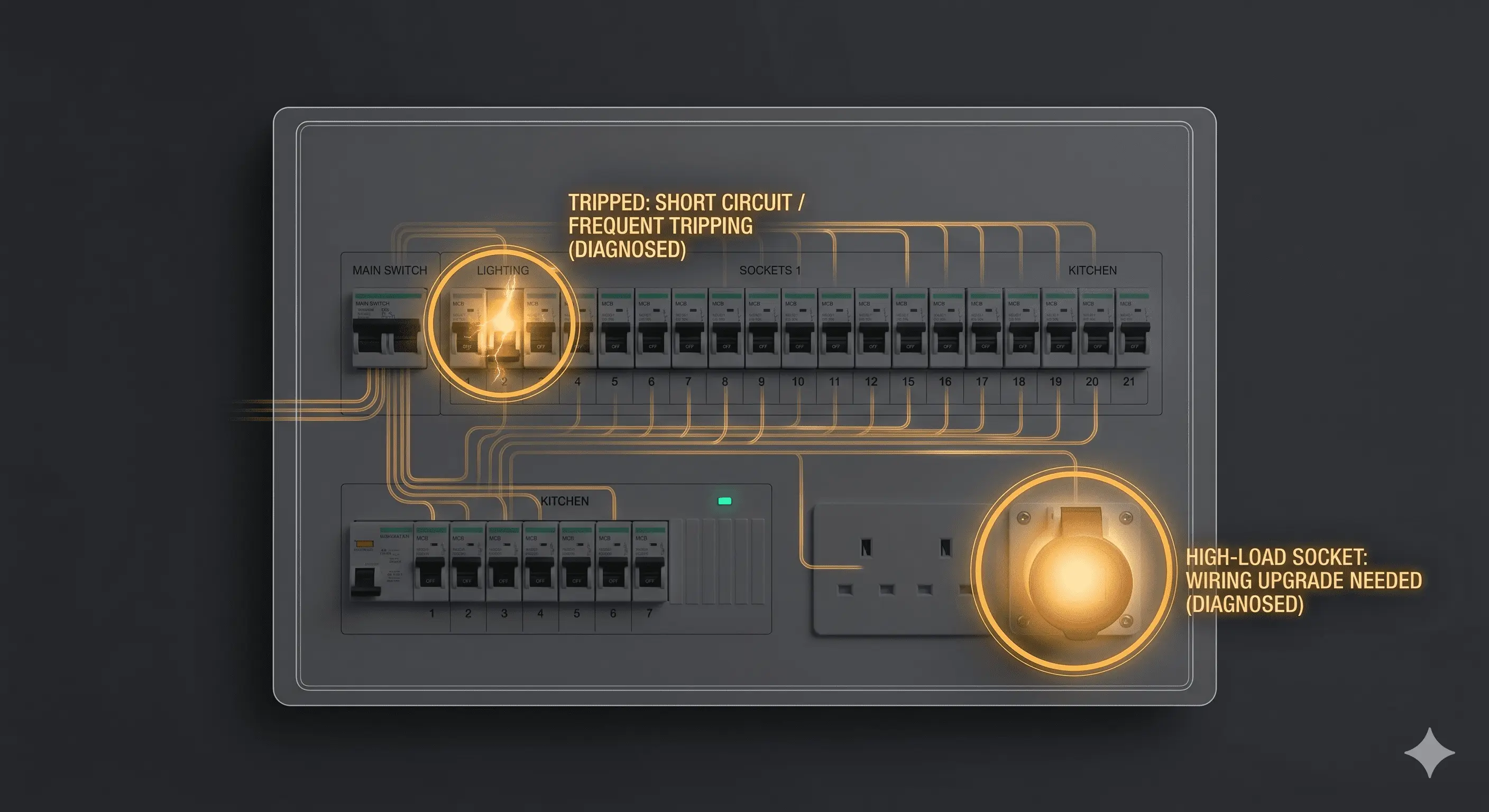
The MCB in your switchboard has one job: cut the power before a fault becomes a fire.
Book a verified electrician on EliteCrew (elitecrew.online) for same-day fault diagnosis.
Need this fixed today?
KYC-verified professionals at your doorstep — upfront pricing, digital invoice, pay after service.
Book a Verified ProfessionalAre you a service professional?
Join EliteCrew Partner and get verified jobs near you.
KYC-verified professionals
Every partner is identity-checked before their first job
Upfront, transparent pricing
The price you see is the price you pay — invoice included
Pay after the work is done
Start the job with your OTP, pay only when it's complete
© 2026 EliteCrew · All rights reserved
Built with care for India's homes